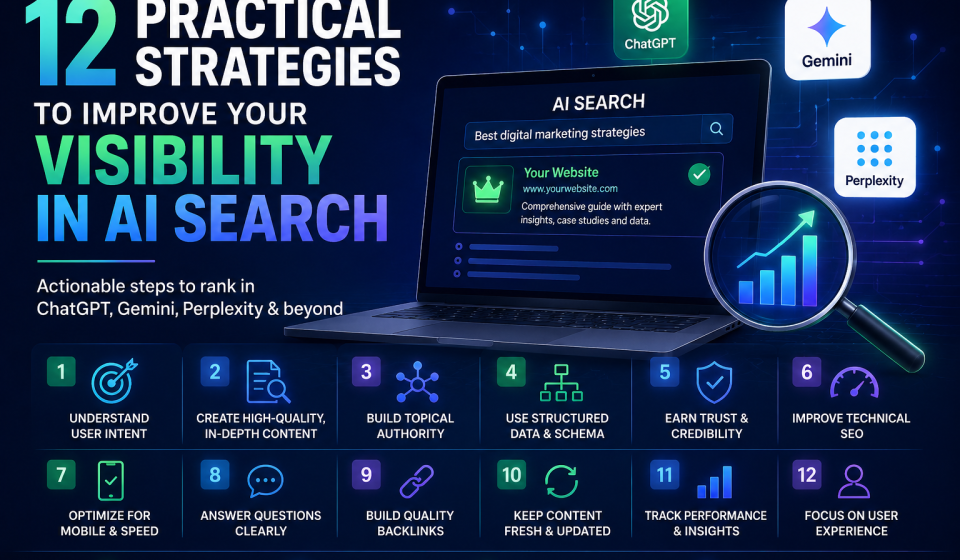
12 Practical Strategies to Improve Your Visibility in AI Search
Now that we’ve explored how AI-powered search works, let’s look at the practical steps businesses can take to improve their visibility across platforms like ChatGPT, Gemini, Perplexity, and future AI search experiences.
These strategies aren’t about “gaming” AI systems. They’re about creating trustworthy, useful content that deserves to be discovered.
1. Build Topical Authority
Publishing a single article on AI SEO won’t establish your expertise.
Instead, create a collection of related resources that explore different aspects of the topic in depth. For example, if your business offers AI SEO services, support that page with articles about schema markup, AI Overviews, structured data, technical SEO, content optimization, voice search, and AI search trends.
A well-connected content library helps both readers and search systems understand your expertise.
2. Answer Real User Questions
Modern search is increasingly conversational.
Think about the questions your prospects ask during consultations, sales calls, emails, or support conversations. These real-world questions often make excellent article topics because they reflect genuine user intent.
Within each article, provide clear, direct answers before diving into deeper explanations.
3. Keep Content Fresh
AI systems tend to favor information that reflects current best practices.
Review important pages regularly to:
- Update statistics
- Add new examples
- Remove outdated advice
- Expand sections where needed
- Include recent industry developments
Refreshing existing content is often more valuable than constantly publishing new articles.
4. Improve Readability
People don’t enjoy reading walls of text—and neither do AI systems that need to understand your content.
Use:
- Clear headings
- Short paragraphs
- Bullet points
- Numbered steps
- Tables where appropriate
- Simple, conversational language
Well-organized content is easier to read, scan, and summarize.
5. Demonstrate Real Experience
Readers trust businesses that show evidence of their work.
Whenever possible, include:
- Case studies
- Before-and-after results
- Campaign examples
- Lessons learned
- Client success stories
- Practical insights from your own projects
Original experience adds credibility that generic articles can’t replicate.
6. Strengthen Technical SEO
Even the best content needs a technically sound website.
Make sure your site:
- Loads quickly
- Works well on mobile devices
- Uses HTTPS
- Has a logical site structure
- Avoids broken links
- Includes descriptive page titles and meta descriptions
Technical improvements make your content easier for search engines to discover and understand.
7. Use Structured Data
Structured data provides additional context about your pages.
Depending on the content, consider implementing schema for:
- Articles
- FAQs
- Organizations
- Services
- Breadcrumbs
- Reviews
This helps search engines better interpret your information and may improve how it’s presented in search experiences.
8. Build Trust Through Transparency
People want to know who’s behind the information they’re reading.
Include:
- An About page
- Author information
- Contact details
- Clear service descriptions
- Privacy and terms pages
Transparency contributes to credibility and supports long-term trust.
9. Create Helpful Supporting Resources
Comprehensive content often performs better than isolated pages.
Support major service pages with:
- Guides
- Checklists
- Glossaries
- Frequently asked questions
- Industry-specific examples
This creates a richer experience for readers while reinforcing your expertise.
10. Focus on User Intent
Instead of asking, “What keyword should I target?” ask, “What problem is this reader trying to solve?”
Every page should have a clear purpose and provide actionable, complete answers that leave readers feeling informed.
11. Measure What Matters
Traditional SEO metrics like rankings and traffic remain valuable, but they don’t tell the whole story.
Also monitor:
- Time spent on page
- Engagement
- Lead generation
- Conversion rates
- Returning visitors
- Brand mentions
Success comes from attracting the right audience—not just more visitors.
12. Prioritize Long-Term Value
AI search will continue evolving, but one principle is unlikely to change:
Helpful, accurate, trustworthy content has lasting value.
Avoid shortcuts and focus on creating resources that genuinely help your audience make informed decisions.
Common Mistakes to Avoid
Many businesses make the same mistakes when trying to adapt to AI-powered search.
Some of the most common include:
- Publishing thin, repetitive content
- Writing for algorithms instead of people
- Ignoring technical SEO fundamentals
- Neglecting regular content updates
- Overusing keywords unnaturally
- Failing to demonstrate expertise or experience
Improving visibility is a long-term process built on consistency and quality.
Looking Ahead
AI is changing how people discover information, compare solutions, and make purchasing decisions.
Rather than replacing traditional SEO, AI-powered search expands the ways people interact with online content.
Businesses that invest in clear communication, trustworthy information, and excellent user experiences will be well positioned as search continues to evolve.
Final Thoughts
The future of search isn’t about choosing between Google and AI assistants—it’s about being visible wherever your audience is looking for answers.
Whether someone searches through Google, asks ChatGPT a question, consults Gemini, or explores Perplexity, the goal remains the same: provide information that is accurate, useful, and easy to understand.
By focusing on expertise, quality content, technical excellence, and a user-first mindset, businesses can build a strong digital presence that stands the test of time.
As AI continues to reshape search, the organizations that succeed will be those that consistently earn trust—not just attention.